

What Is a PTE Core Mock Test?
A full PTE Core mock test takes you through Speaking and Writing, Reading, and Listening in one continuous session. It includes different question types, timed responses, recorded speaking answers, audio that normally plays only once, and a final performance report. You cannot return to previous questions, replay recordings, or re-record speaking responses.
Preparing with individual questions is helpful, but a full mock test gives you a useful estimate of your current performance under exam-style conditions. Use your mock test report primarily to identify weak skills, recurring mistakes, and readiness gaps.
Practice Questions vs. Mock Tests
Practice Questions help you improve individual skills and become familiar with specific question types. They are ideal for focused learning and targeted practice.
Mock Tests simulate the complete exam under timed conditions. Instead of focusing on individual question types, they assess your overall performance across all test sections. Mock tests evaluate not only your English proficiency but also your time management, concentration, endurance, and test-taking strategy.
Benefits of Taking Mock Tests
- Experience the real exam format and timing
- Evaluate your overall readiness for the PTE Core exam
- Identify strengths and weaknesses across all language skills
- Improve pacing and time management
- Build confidence and reduce test-day anxiety
Many candidates discover that timing, not English ability, is their biggest challenge. A full mock test is often the first place that gap becomes clear.
When you are ready, choose a complete mock test and set aside enough uninterrupted time before starting.
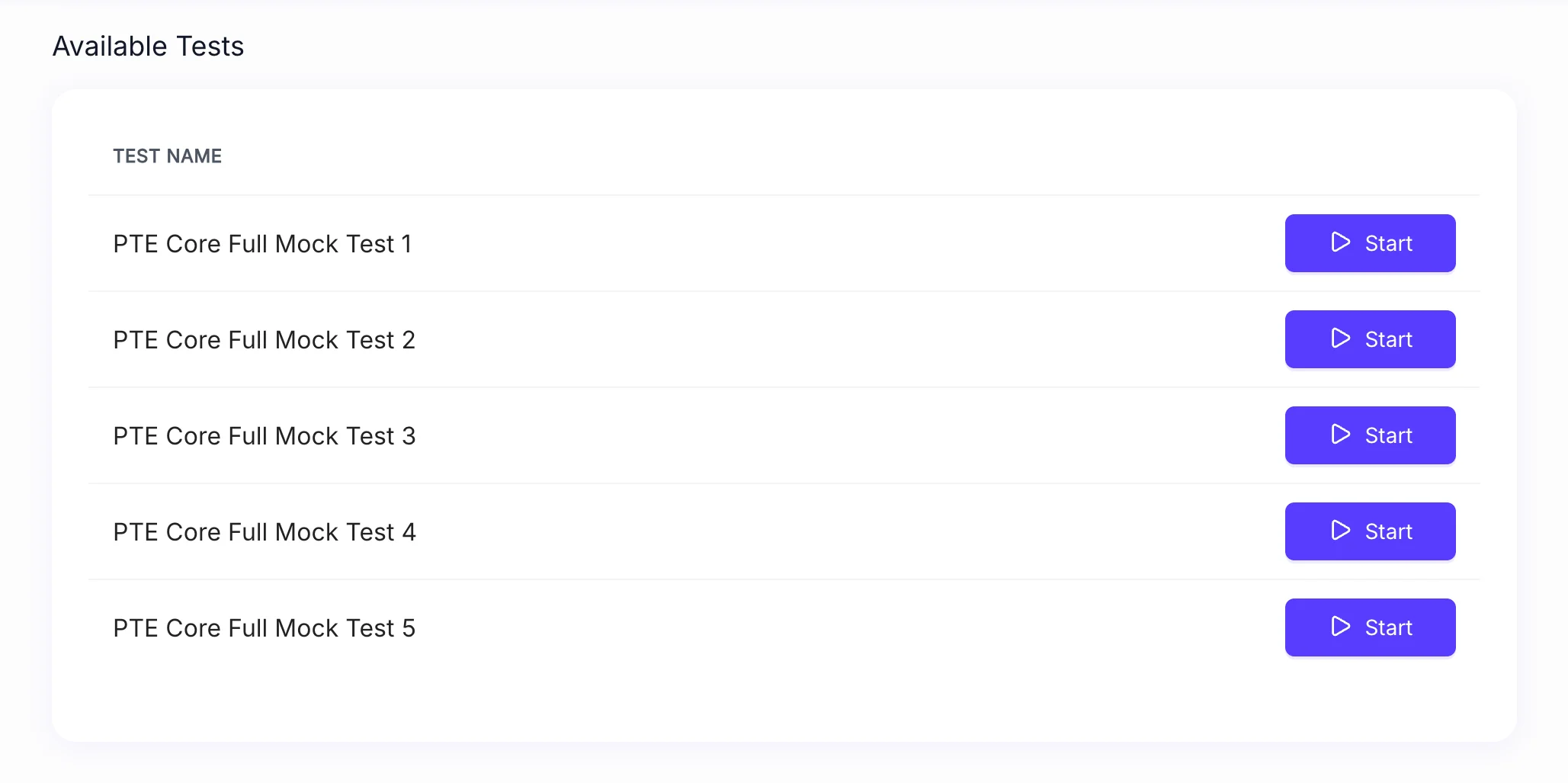
Before You Start the Mock Test
Before you begin, make sure you are prepared to complete the test under conditions similar to the real PTE Core exam.
- Choose a quiet location free from distractions.
- Use a computer with a reliable internet connection.
- Connect your microphone or headset.
- Close unnecessary browser tabs and applications.
- Silence notifications on your devices.
- Set aside approximately two hours of uninterrupted time.
When the mock test opens, you will first see an overview of the test parts and timing.
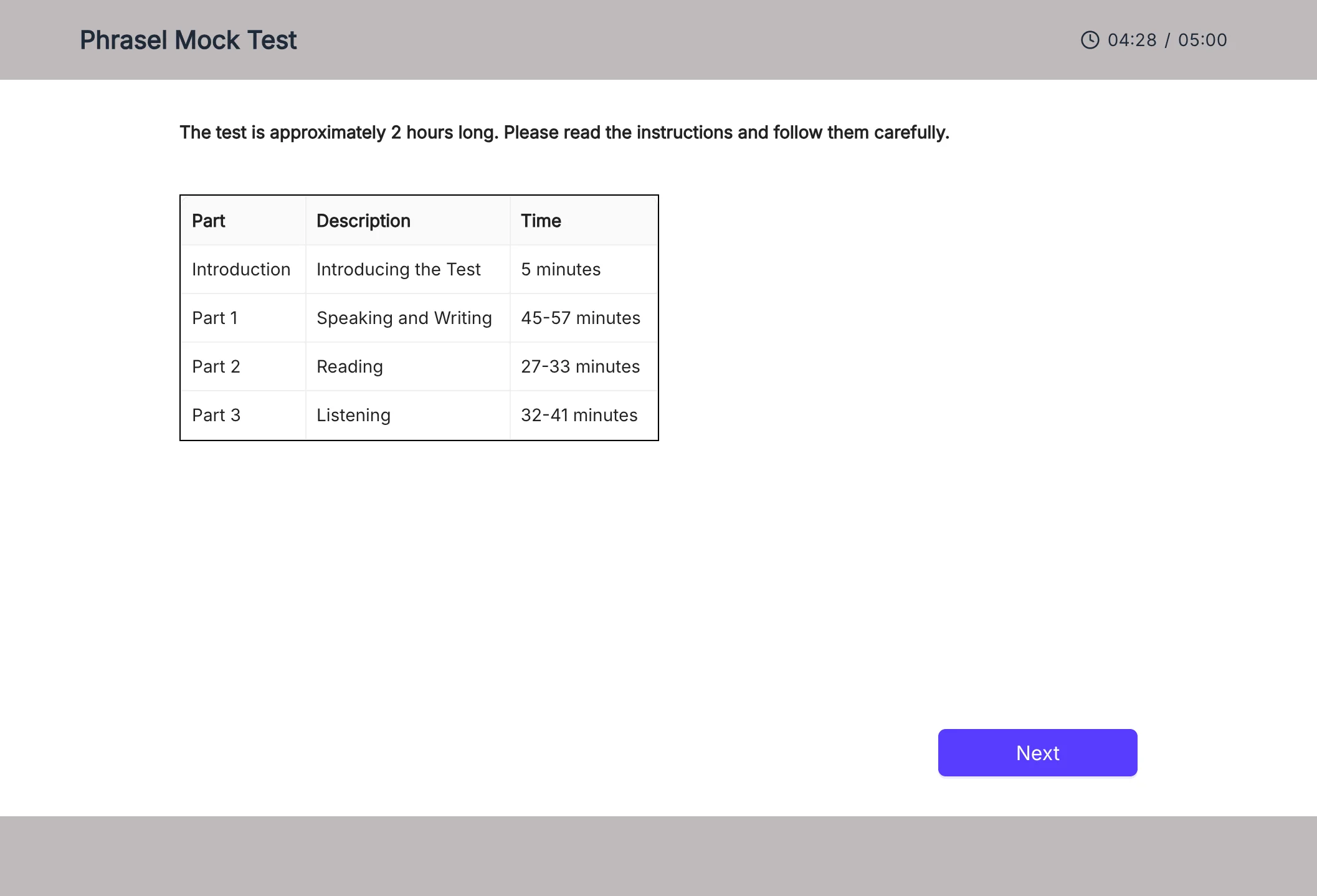
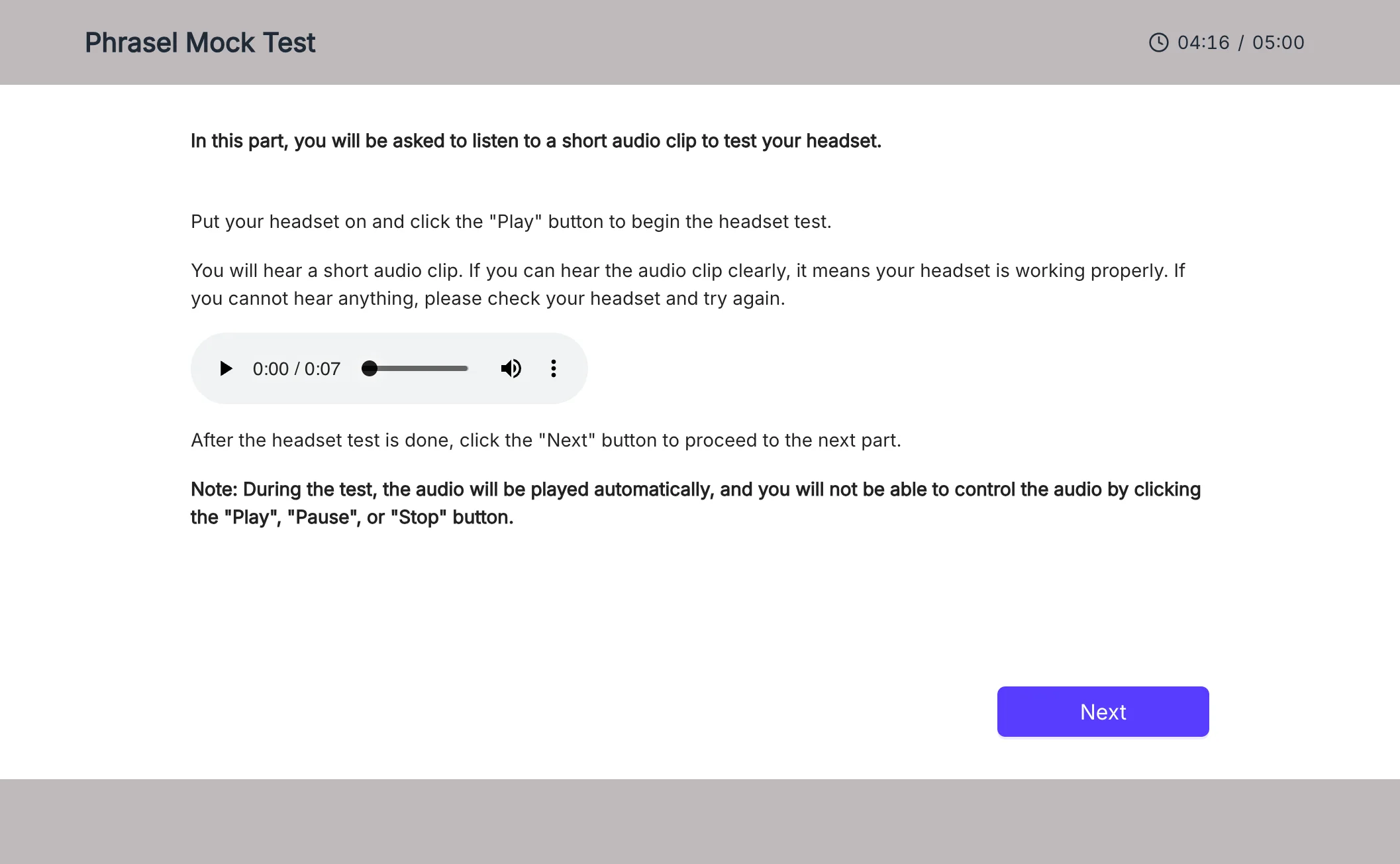
Next, complete the headset check to confirm that you can hear the audio clearly.
Then check your microphone to make sure your speaking responses will be recorded properly.
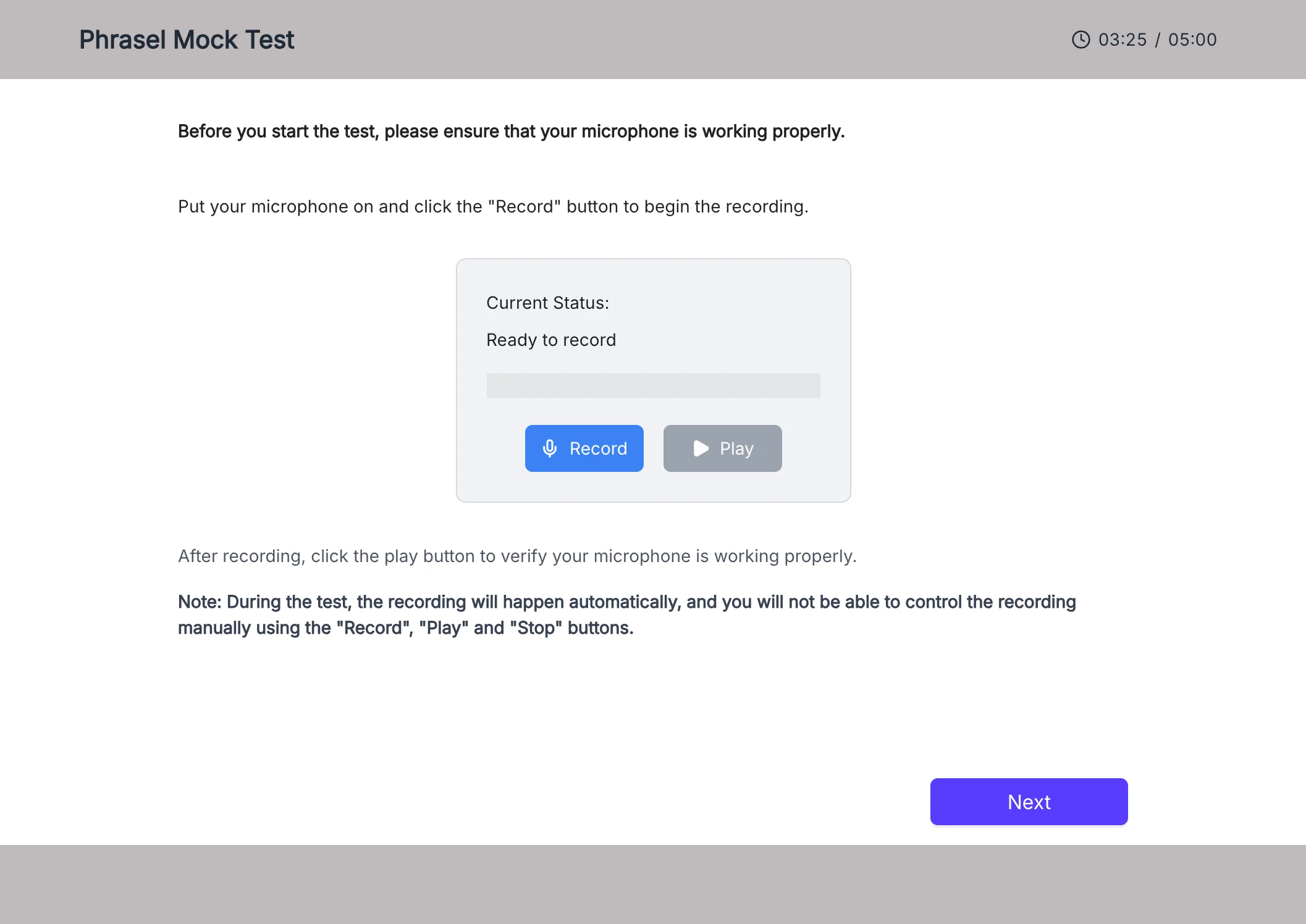
If your microphone is not working, make sure your browser has permission to access it. You can check your browser's microphone settings and allow access before restarting the test.
Finally, read the test instructions carefully. They explain how the sections are timed, how to move forward, and that you cannot return to previous questions.
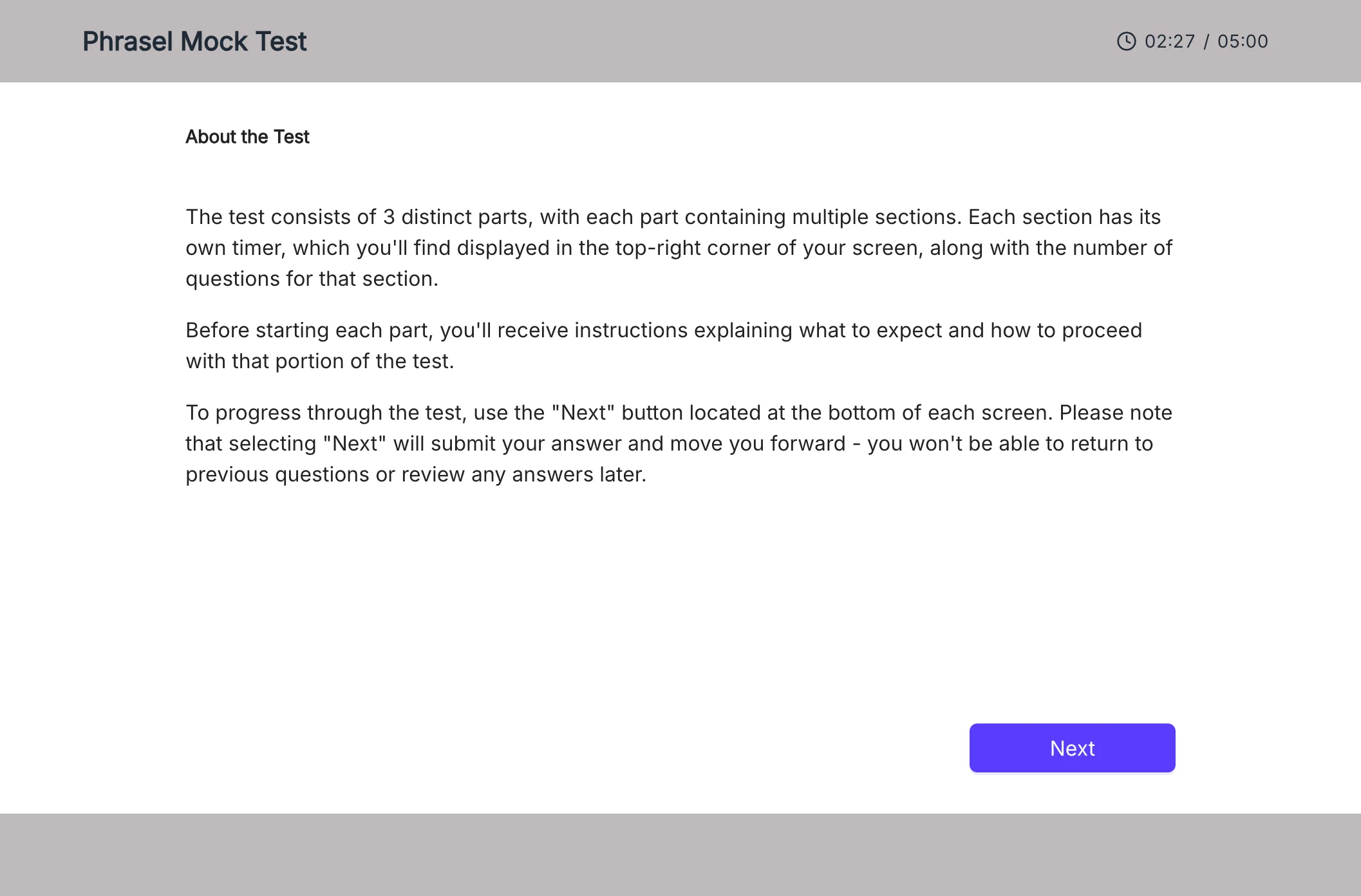
Start only when you are ready.
What You Will See During the Mock Test
The mock test guides you through Speaking, Writing, Reading, and Listening questions in an exam-style sequence. Each screen clearly displays the task instructions, available time, question progress, and the tools needed to enter or record your answer.
The first task is an unscored microphone check. It is designed to verify that your microphone is working properly. This task is not scored and does not count toward your final grade, but will be sent along with your score report to institutions or immigration offices as a voice sample.
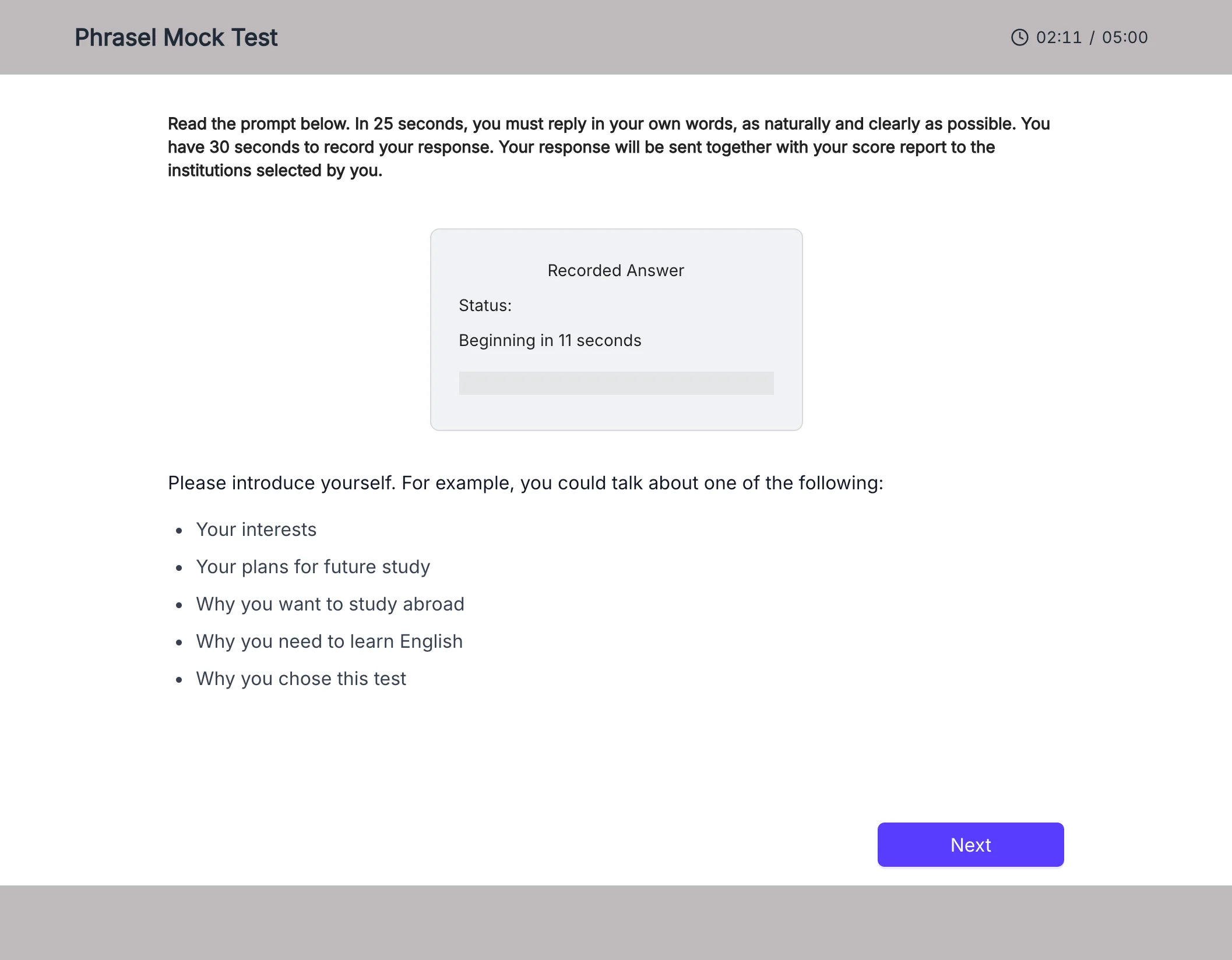
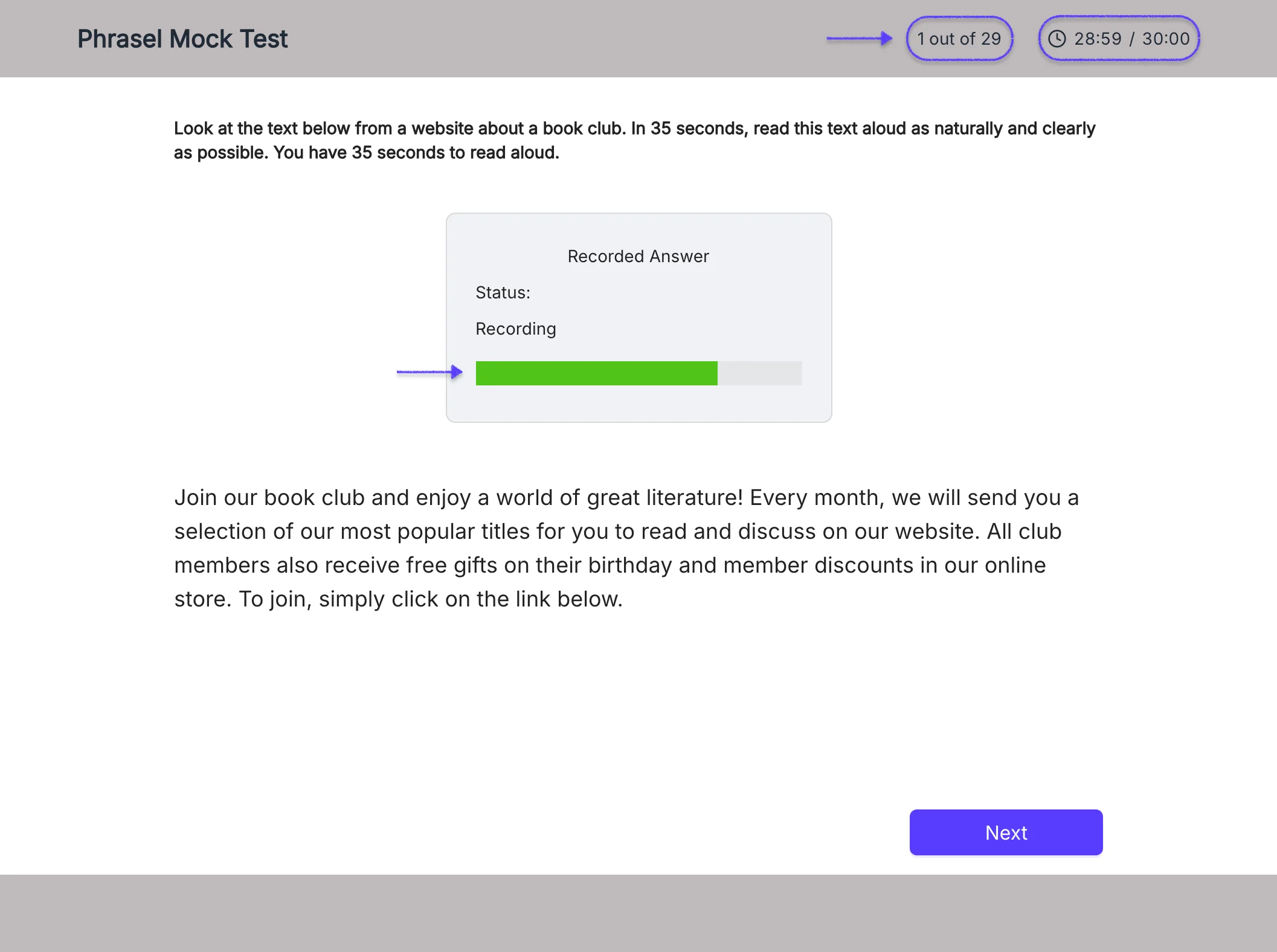
Speaking
Speaking questions display a written, audio, or visual prompt together with preparation and recording timers. The recording progress bar shows when recording begins, helping you practise starting promptly and completing your response within the available time.
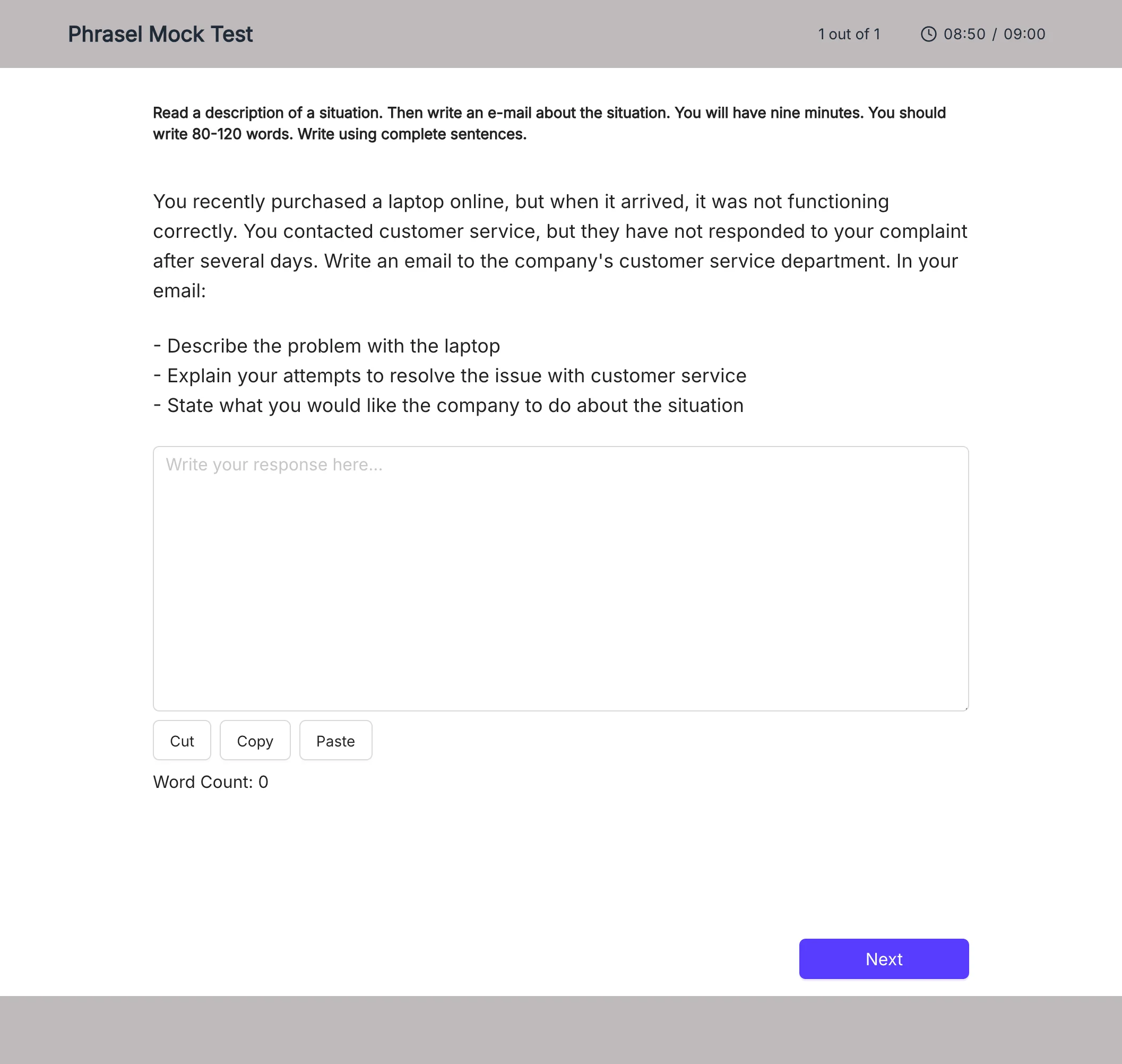
Writing
Writing questions include the prompt, response box, timer, and word count. These features help you manage your time, organize your ideas, and keep your response within the required length.
Reading
Reading questions present a passage followed by selectable, movable, or fill-in-the-blank answer options. The interface allows you to complete each task while monitoring your remaining time and progress.
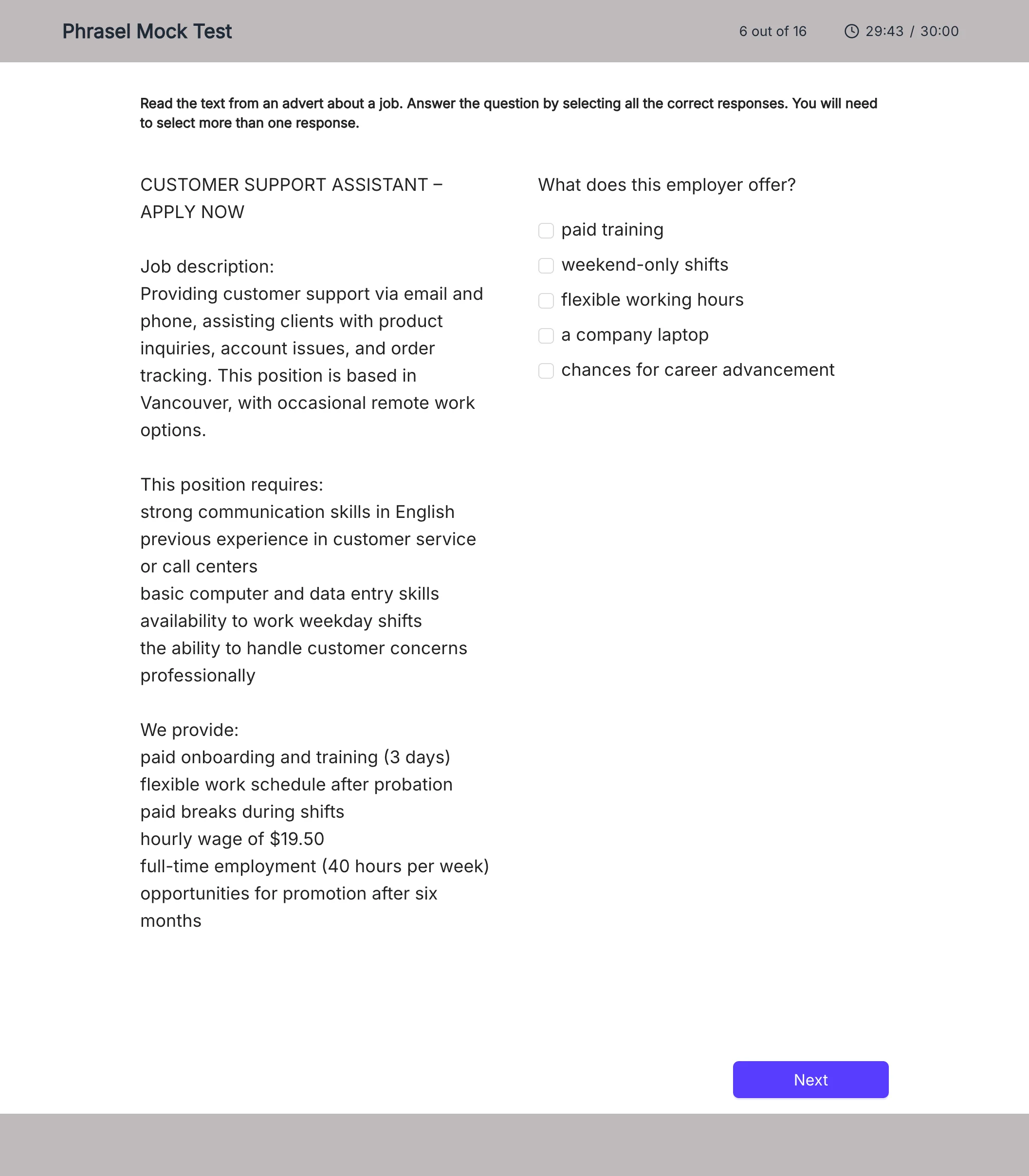
Listening
Listening questions include an audio recording and the answer format required for the task. Because recordings are played only once, you need to listen carefully while selecting, typing, or correcting your answer.
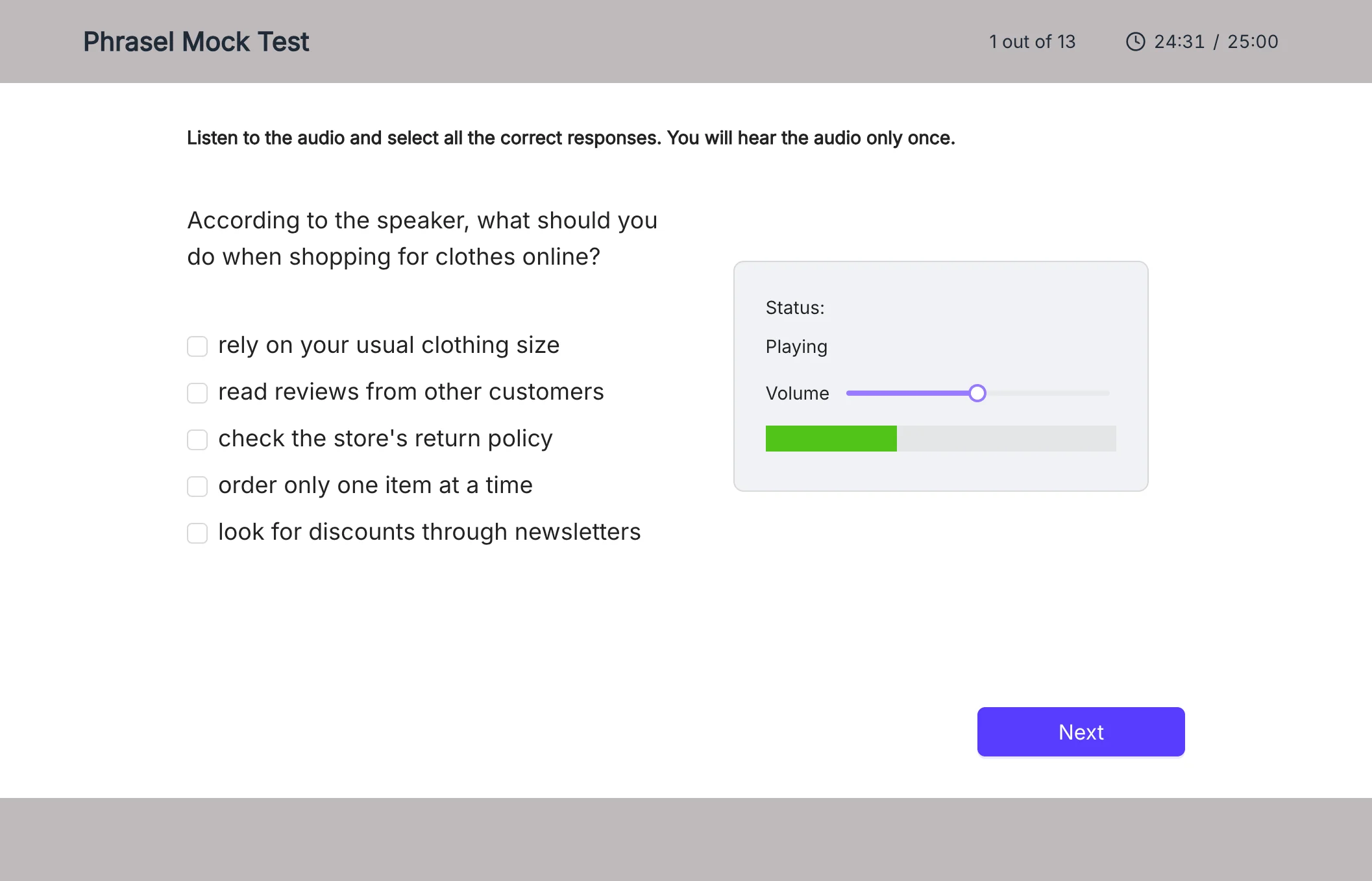
How to Take the Mock Test Under Exam Conditions
To obtain a meaningful result, complete the mock test under conditions that are as close as possible to the real exam:
- Complete it in one sitting.
- Do not pause to search for answers or check grammar rules.
- Do not replay audio unless the platform specifically allows it for technical reasons.
- Move forward after submitting each question.
- Use a normal conversational speaking volume.
- Avoid taking an unscheduled break.
- Keep your phone and study materials out of reach.
According to Pearson, in the real test, audio cannot be replayed, speaking responses cannot be re-recorded, previous questions cannot be reopened, and there are no scheduled breaks.
How to Interpret Your Scores
Start with the four individual skill scores rather than the overall result. Canadian immigration programs generally evaluate language performance by skill, so a strong overall score does not compensate for a skill that remains below the required CLB level. Convert each skill with the PTE Core to CLB converter, then check Express Entry impact with the CRS language points calculator.
A low skill score is only a starting point. Look for the specific patterns behind it, such as:
- Missing words in Write from Dictation
- Losing concentration in Fill in the Blanks
- Hesitation in Repeat Sentence
- Incomplete content in Describe Image
- Poor organization in Write Email
Phrasel's mock test reports show:
- Overall estimated score
- Speaking tasks score
- Writing tasks score
- Reading tasks score
- Listening tasks score
- Correct answers
- Transcripts
- Content feedback
- Pronunciation feedback
- Grammar or spelling feedback
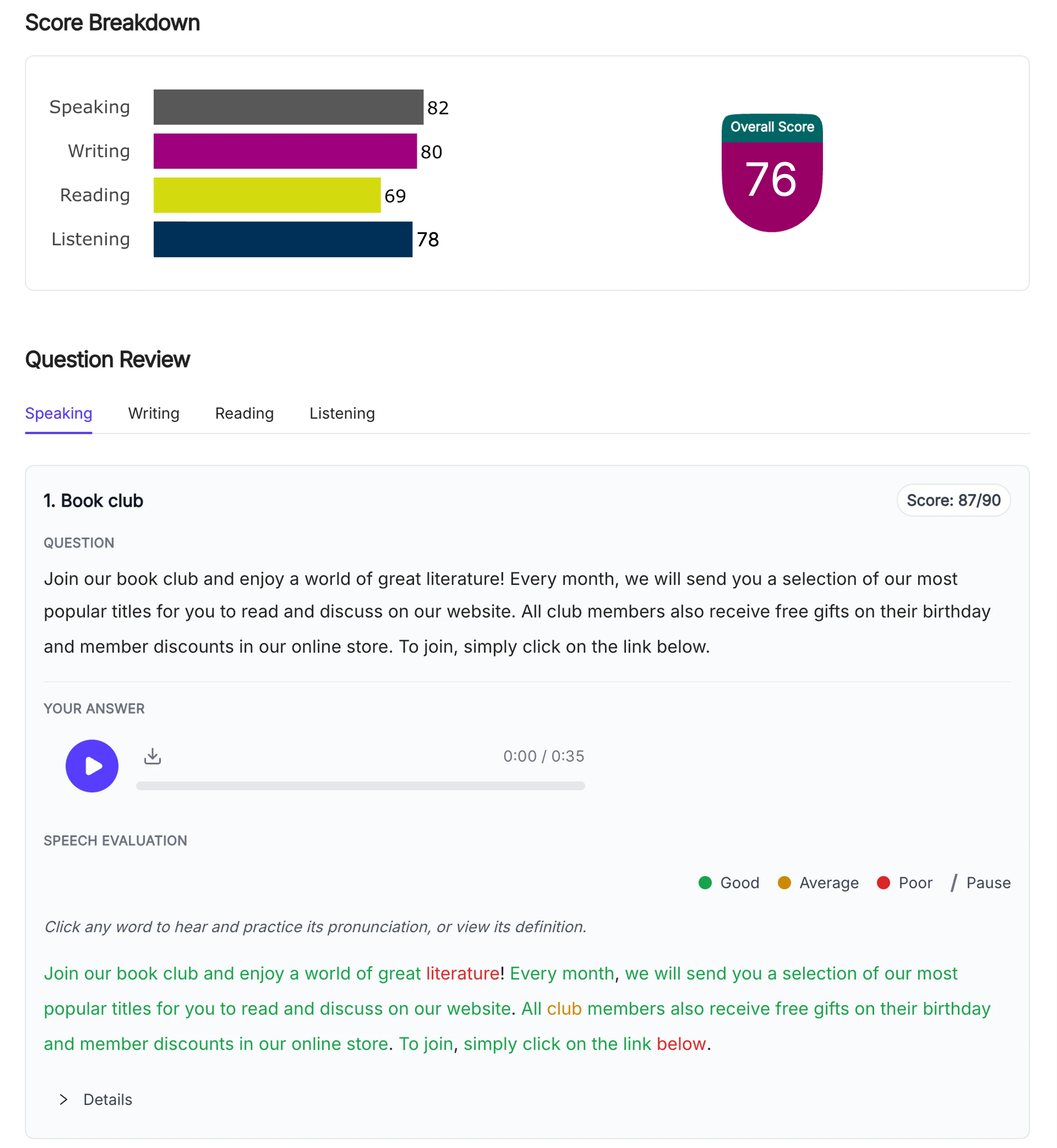
Review your performance by skill area, identify the question types causing the greatest score loss, and adjust your study plan accordingly. The goal is to treat each mock test as a diagnostic tool for continuous improvement. Take a realistic PTE Core mock test and review the feedback for each question one by one to gain a clearer picture of your exam readiness before test day.
Frequently Asked Questions
Will my mock score match my real exam score?
Not exactly. A mock test score is an estimate of your current performance under exam-style conditions. It can be close if you take the mock realistically and review feedback carefully, but only an official PTE Core test produces a score you can use for immigration or other formal purposes.
Should beginners take a full mock test?
Yes, but usually after first learning the main question types. Otherwise, the result may mostly reflect unfamiliarity with the interface.
Can I pause a PTE Core mock test?
For realistic practice, complete it continuously. The actual PTE Core test has no scheduled break, and its clock continues during an unscheduled break.
Should I retake a mock test immediately?
Not usually. Review the report, practise the weakest tasks, and allow enough time for improvement before taking another one.
How many mock tests should I take before the exam?
There is no fixed number. For beginners, focus on targeted practice questions to build familiarity with the PTE Core format and question types. Once you're comfortable, take a full mock test every 1–2 weeks, increasing to weekly as your exam approaches.