
If you are looking for a PTE Core mark distribution by percentage, there is one important point to know first: Pearson does not publish an official percentage weightage for each PTE Core question type.
Instead, Pearson explains:
- which skill or skills each question contributes to;
- how many questions normally appear;
- whether marks are awarded per word, per blank, or for several response traits; and
- whether partial or negative marking applies.
This information still shows that some PTE Core tasks have greater practical score potential than others. In particular, questions that appear frequently, contribute to two communicative skills, or provide several opportunities to earn partial credit deserve close attention during preparation.
Which PTE Core Questions Are Most Important?
Several tasks stand out because of their combination of frequency, cross-scoring, and partial-credit opportunities.
Important: The priority levels below are not official Pearson percentage weightings. They are practical preparation priorities based on Pearson's published scoring structure.
Listening + Speaking
10–12 questions; scored for content, pronunciation and fluency
Listening + Writing
3–4 questions; every correctly spelled word can earn credit in both skills
Reading + Writing
5–6 questions; each correct blank contributes to both skills
Reading + Speaking
6–7 questions; contributes to two skills and assesses content, pronunciation and fluency
Speaking
3–4 questions; scored across content, pronunciation and fluency
Listening + Writing
2–3 questions; correctly spelled words contribute to both skills
Reading + Writing
Cross-scored and assessed for content, form, grammar and vocabulary
Listening + Writing
Cross-scored and assessed across several writing and comprehension criteria
Listening + Reading
Correct selections affect two skills, but incorrect selections deduct points
Pearson does not state that these tasks contribute a particular percentage of the final 10–90 score. The priority assessment above instead reflects the number of scoring opportunities and skills affected.
How Cross-Scoring and Partial Credit Work
Some PTE Core questions use cross-scoring, meaning one response contributes to two communicative skills. For example, Repeat Sentence affects both Listening and Speaking, while Write from Dictation affects both Listening and Writing.
Many of these tasks also use partial-credit scoring, so you can earn points for correctly completed parts of a response even if the entire answer is not perfect. This creates multiple scoring opportunities within a single question.
The examples below show how partial-credit opportunities work in some of the most influential PTE Core tasks.
1. Repeat Sentence: Strong Impact on Speaking and Listening
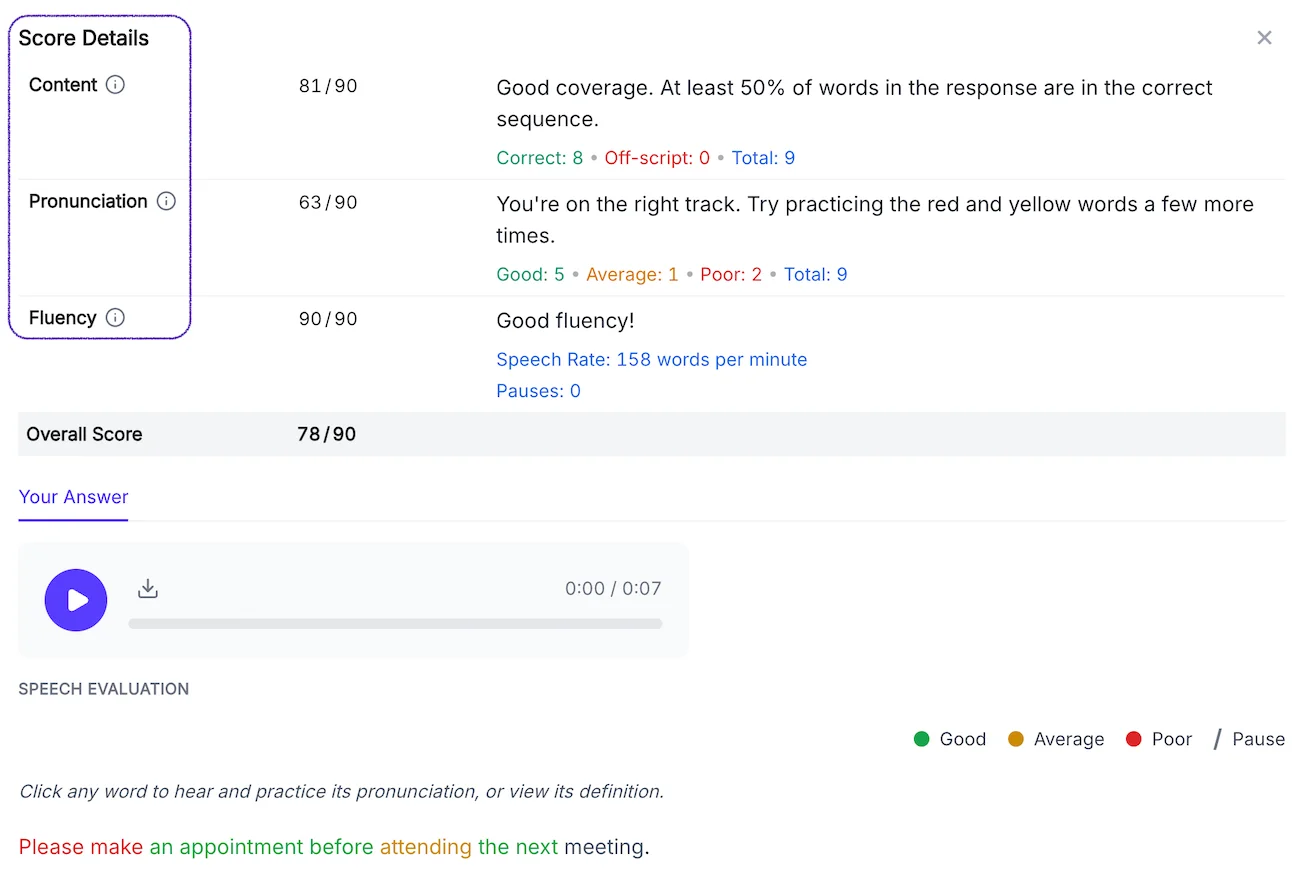
Repeat Sentence appears 10–12 times, making it one of the most frequent PTE Core tasks. Each response contributes to both Listening and Speaking and is scored for content, pronunciation, and oral fluency.
Because content receives partial credit based on how much of the sentence is reproduced correctly and in sequence, performance across multiple Repeat Sentence questions can influence both skill scores.
2. Write from Dictation: Important for Listening and Writing
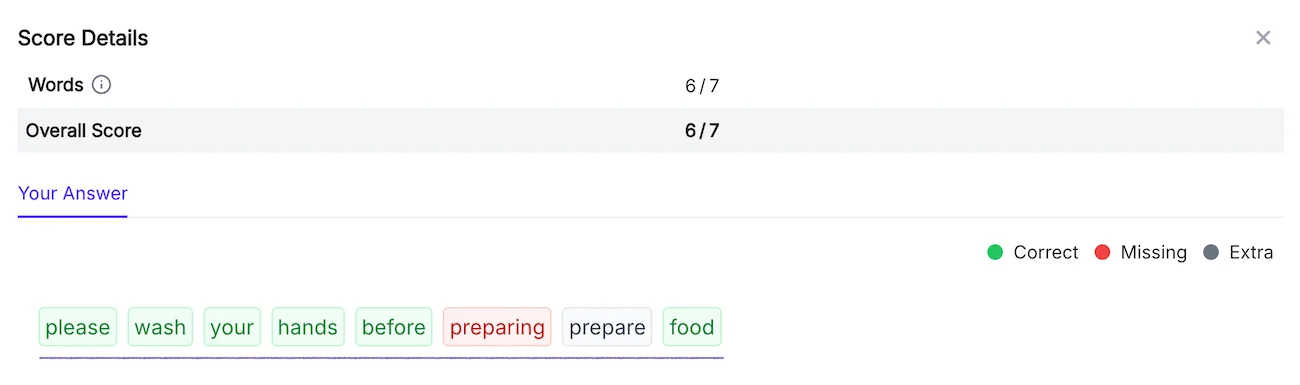
Write from Dictation appears 3–4 times and contributes to both Listening and Writing.
Scoring is word-based: each correctly spelled word can receive partial credit. This means one missed word does not make the entire response incorrect, while accurate transcription provides multiple scoring opportunities within each sentence.
3. Reading & Writing: Fill in the Blanks
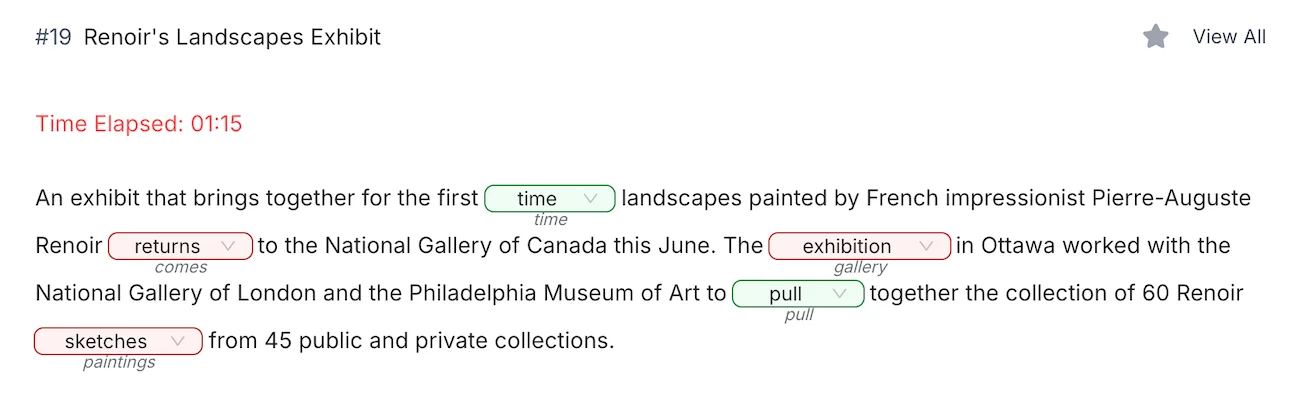
This task normally appears 5–6 times and contributes to both Reading and Writing.
Each correctly completed blank receives partial credit, so a single question can contain several scoring opportunities. Unlike the regular Reading Fill in the Blanks task, this version directly affects two skill scores.
4. Read Aloud: Supports Reading and Speaking
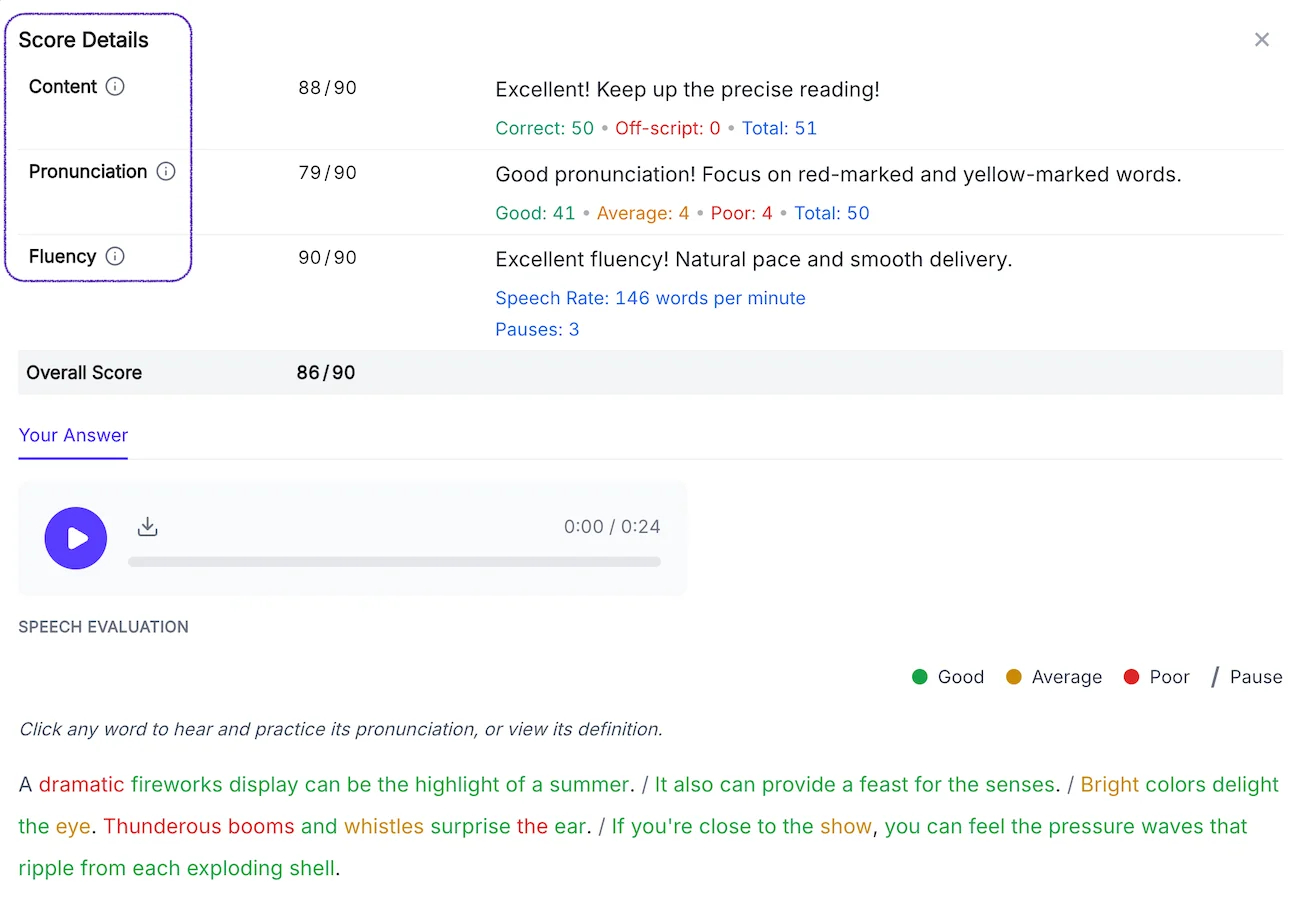
Read Aloud appears 6–7 times and contributes to both Reading and Speaking.
Responses are scored for content, pronunciation, and oral fluency. Omissions, substitutions, and added words affect the content score, while pronunciation and fluency are assessed separately.
5. Describe Image: High Value for Speaking
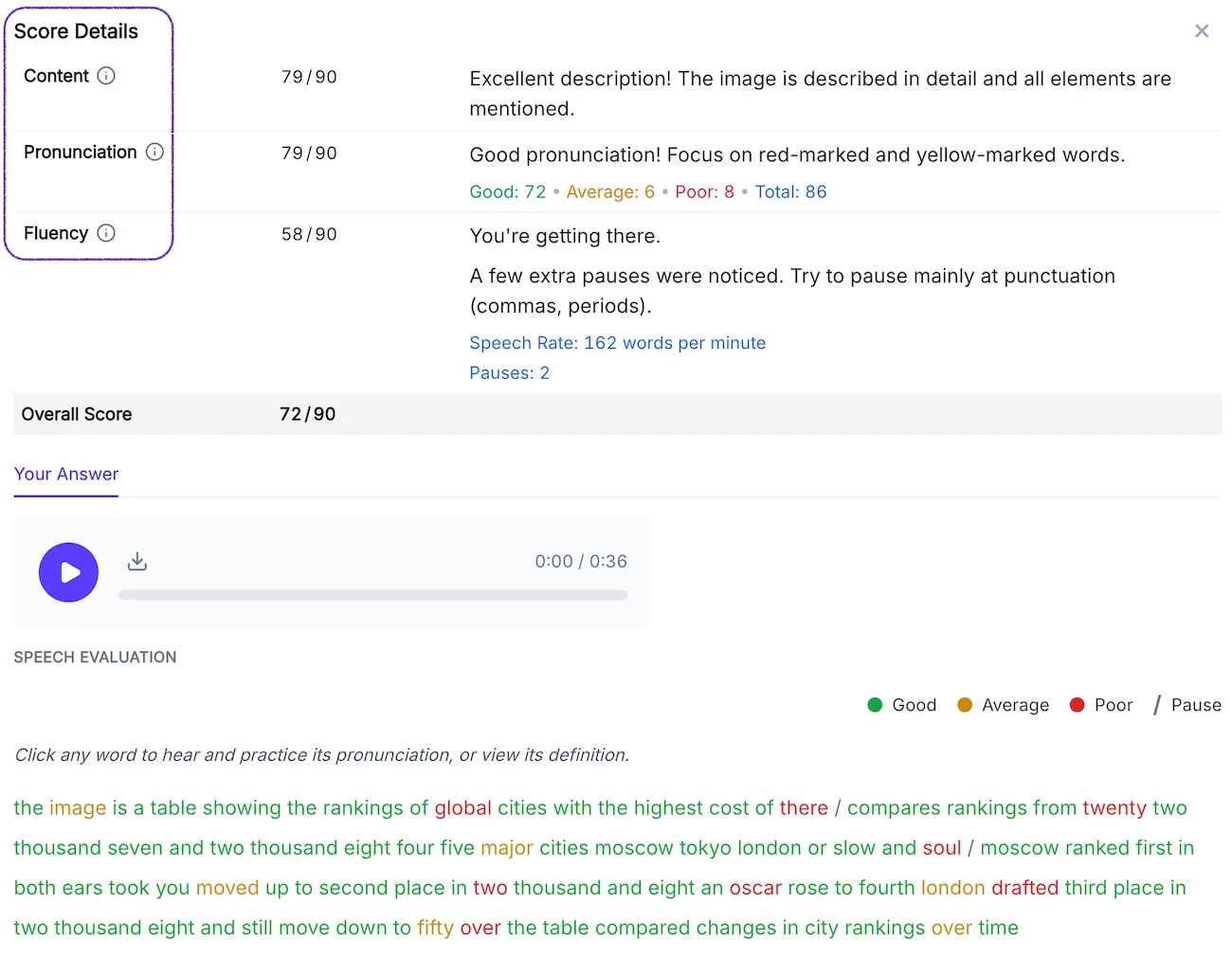
Describe Image appears 3–4 times and contributes only to Speaking, but each response is assessed for content, pronunciation, and oral fluency.
For content, Pearson rewards responses that identify the important elements of the image and explain meaningful relationships between them, rather than relying only on generic or memorized descriptions.
6. Other Important Cross-Scored Tasks
Several other question types can influence two skill scores and should not be overlooked.
Listening: Fill in the Blanks
This task contributes to Listening and Writing. You normally receive 2–3 questions, and each correctly spelled word receives credit.
Summarize Written Text
Summarize Written Text contributes to Reading and Writing and is assessed for content, form, grammar and vocabulary. Although only 1–2 questions normally appear, a well-constructed response contributes to both skills.
Summarize Spoken Text
This task contributes to Listening and Writing. Pearson evaluates the summary for content, form, grammar, vocabulary and spelling, making it different from simple correct/incorrect Listening questions.
Highlight Incorrect Words
Highlight Incorrect Words contributes to Listening and Reading, but it also uses negative marking. You receive a point for correctly identifying an incorrect word and lose a point for an incorrect selection, with a minimum item score of zero.
Because of this, selecting words you are unsure about can work against you.
Are Online PTE Core Percentage Weightage Charts Accurate?
You may find websites, videos or forum posts assigning exact percentages or marks to each PTE Core question type.
These figures should be treated carefully.
Pearson's official PTE Core Score Guide publishes detailed scoring criteria but does not provide a fixed percentage contribution for each of the 19 question types. Therefore, a claim such as Question X accounts for 30% of your score should not be presented as an official Pearson figure unless Pearson publishes supporting data.
Community experience can still be useful for identifying tasks that candidates commonly find influential. Recent discussions, for example, repeatedly focus on Repeat Sentence for Speaking and Write from Dictation for Listening/Writing. However, individual test experiences cannot establish an exact scoring percentage.
How Should You Prioritize Your PTE Core Practice?
Do not divide your study time equally between all question types.
Start with tasks that:
- contribute to two skill scores;
- appear several times in the test;
- provide multiple partial-credit opportunities; and
- affect a skill in which you currently need to improve.
For many candidates, this makes Repeat Sentence, Write from Dictation, Reading & Writing: Fill in the Blanks, and Read Aloud especially useful tasks to master early.
Then focus on skill-specific tasks such as Describe Image, Write Email, Reading Fill in the Blanks, Summarize Written Text, and Summarize Spoken Text according to your weaker areas.
The objective is not to ignore lower-impact questions. It is to spend your preparation time where stronger performance can influence the greatest number of scoring opportunities.
Frequently Asked Questions
Does Pearson publish an official PTE Core mark distribution by percentage?
No. Pearson does not publish a fixed percentage weightage for each PTE Core question type. It instead explains which skills each task contributes to, how many questions normally appear, and how partial or negative marking works.
Which PTE Core questions have the strongest practical score impact?
Repeat Sentence, Write from Dictation, and Reading & Writing: Fill in the Blanks are especially influential because they appear frequently, contribute to two skills, and offer partial credit. Read Aloud is also a high-priority task for the same reasons.
What is cross-scoring in PTE Core?
Cross-scoring means one response contributes to two communicative skills. For example, Repeat Sentence affects Listening and Speaking, while Write from Dictation affects Listening and Writing.
Are online PTE Core percentage weightage charts accurate?
Treat them carefully. Pearson's Score Guide does not assign a fixed percentage of the 10–90 score to each of the 19 question types, so claims such as Question X is 30% of your score should not be treated as official Pearson figures.
Tags:
- #pte-core-mark-distribution
- #pte-core-scoring
- #pte-core
- #cross-scoring
- #repeat-sentence
- #write-from-dictation