
If you are choosing between PTE Core and CELPIP for Canadian immigration, both tests assess Speaking, Writing, Reading, and Listening, and both are accepted by Immigration, Refugees and Citizenship Canada (IRCC). For CELPIP, you must take CELPIP-General; for PTE, you must take PTE Core, not PTE Academic.
The more important difference is how the two tests assess your English.
For candidates who might find it difficult to quickly brainstorm and develop ideas, PTE Core may feel easier and more predictable.
PTE Core vs CELPIP: Main Differences
| Feature | PTE Core | CELPIP-General |
|---|---|---|
| Total test length | About 2 hours | Under 3 hours |
| Speaking & Writing | 50–65 minutes combined | Speaking: 15–20 minutesWriting: 53–60 minutes |
| Reading | 27–37 minutes | 43–56 minutes |
| Listening | 22–37 minutes | 46–55 minutes |
| Speaking style | Short, structured tasks | 8 extended speaking tasks |
| Writing | Summary + email, with additional integrated tasks contributing to Writing | Email + survey response |
| Idea generation | Relatively limited | Significant |
| Reading style | Shorter section with varied task formats | More passage-based |
| Listening style | Short recordings with varied task types | Longer conversations, discussions, news, and viewpoints |
| Speaking & Writing scoring | Automated | Speaking rated by trained raters; Writing uses AI plus human review |
PTE Core vs CELPIP Speaking
This is probably the largest practical difference between the two tests.
PTE Core Speaking Questions
PTE Core includes:
Several of these tasks require little or no original content creation.
For example:
Read Aloud: You see a short passage like the following on the screen and read it aloud into the microphone.
Public transportation can significantly reduce traffic congestion and help lower emissions in large cities by encouraging people to use buses, trains, and subways instead of private cars. It can also make transportation more affordable and accessible, while improving the overall efficiency and sustainability of urban communities.
You do not need to generate any ideas. The content is already provided, so your focus is on accurate pronunciation, appropriate pace, and fluent delivery.
Repeat Sentence: You hear a sentence such as:
The new office will open at the beginning of next month.
Your job is simply to repeat what you heard as accurately and fluently as possible.
Respond to a Situation: You read and listen to a short everyday situation like below, then respond as if you were speaking to the person involved.
Your friend has suggested going to Sam's Café for dinner, but you know that Sam's Café only serves coffee and tea. Politely let your friend know that you'd prefer not to go there for dinner and suggest an alternative place.
The situation already gives you the context, problem, and communication goal, so you do not need to brainstorm a topic from scratch. Your task is mainly to respond clearly, appropriately, and politely.
In PTE Core Speaking tasks, the content is already determined for you. Your attention can therefore remain on pronunciation, fluency, comprehension, and accurate delivery.
CELPIP Speaking Questions
CELPIP has eight scored Speaking tasks:
- Giving Advice
- Talking about a Personal Experience
- Describing a Scene
- Making Predictions
- Comparing and Persuading
- Dealing with a Difficult Situation
- Expressing Opinions
- Describing an Unusual Situation
A typical task may require you to do something like:
Giving Advice: Your friend is considering changing careers. Give your friend advice and explain why.
Now you must quickly decide:
- what advice to give;
- what reasons support it;
- what examples to use;
- how to organize the response; and
- how to continue speaking for the required time.
Describing an Unusual Situation: In CELPIP Speaking, you may be shown an unusual or unfamiliar scene and asked to describe it to someone who cannot see it.
For example, in the image below, several people appear to be preparing or inflating a large colorful object in a park. However, it is not immediately obvious what the object is, what the equipment is being used for, or exactly what activity is taking place.

This can make the task challenging because you must quickly decide how to describe an unfamiliar situation while continuing to speak clearly and naturally. You may need to rely on phrases such as It looks like…, They seem to be…, or I’m not completely sure, but… when the scene is ambiguous.
CELPIP's own Speaking criteria assess the number and quality of ideas, organization, examples, and supporting details, in addition to vocabulary, grammar, pronunciation, fluency, and task fulfillment.
PTE Core vs CELPIP Writing
The same difference appears in Writing.
PTE Core Writing
The main PTE Core writing tasks include:
These tasks also require little or no original content creation.
For example:
Summarize Written Text: You read a passage of up to about 200 words and write a 25–50 word summary of its main ideas.
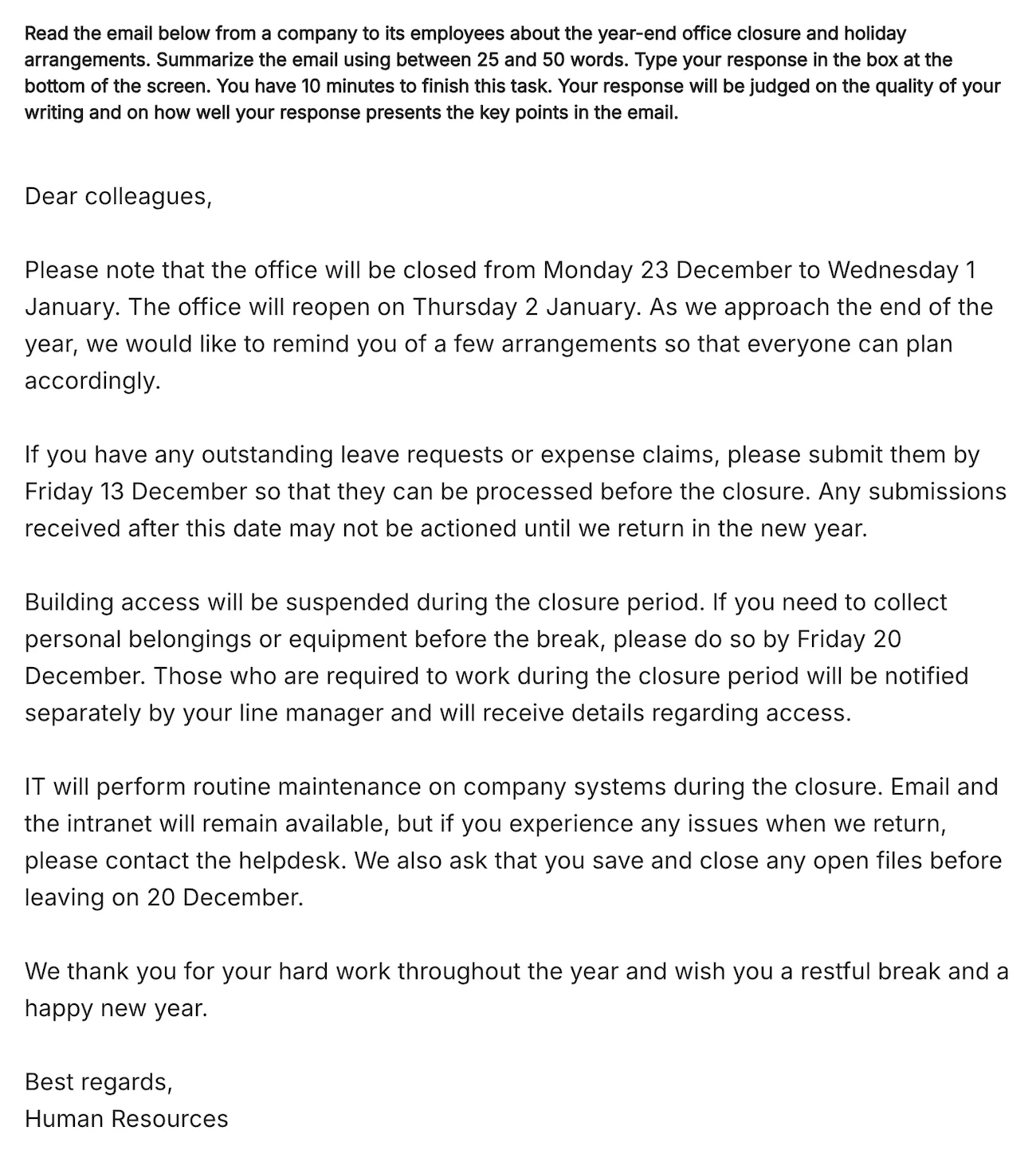
The content is already provided, so the task is mainly to identify the key points, combine them logically, and express them accurately and concisely, rather than generate your own arguments or examples.
Write Email: Write an email in response to a given situation.
You are organizing a birthday party for your friend and need to make a group reservation at a restaurant. Since online reservations are unavailable, you must send an email to the restaurant with specific details. Use the points below to guide your response.
- Request a group reservation
- Provide details about the birthday celebration
- Inquire about parking availability for guests
That means a substantial part of the writing you perform is based on information that has already been provided.
PTE Core also uses integrated tasks in other sections that contribute to Writing, including activities such as Summarize Spoken Text, Listening Fill in the Blanks, and Write from Dictation.
CELPIP Writing
CELPIP has two Writing tasks:
- Writing an Email
- Responding to Survey Questions
The writing an email task is conceptually similar to PTE Core's email question. The main difference is the survey response task.
For example, you might be presented with two options like the following for improving your community and asked which you prefer.
Read the following information.
City Development Survey
You live in a small town of 10,000 people. A large green area in the centre of town is undeveloped. The city has sent out an opinion survey to see what residents would like to have built in that area.
Choose the option that you prefer. Why do you prefer your choice? Explain the reasons for your choice. Write about 150-200 words.
- Shopping Complex: This shopping mall would include restaurants, a large supermarket, and a movie theatre.
- Recreational Park: This park would include a sports complex, a large green area, and a small petting zoo.
You must choose a position and then develop:
- reasons;
- explanations;
- examples; and
- supporting details.
CELPIP's Writing criteria specifically assess the number of ideas, quality of ideas, organization, examples, and supporting details.
PTE Core vs CELPIP Reading
The difference in Reading is less about idea generation and more about question style and test length.
PTE Core Reading
PTE Core has five Reading question types:
- Reading & Writing: Fill in the Blanks
- Multiple Choice, Multiple Answers
- Reorder Paragraph
- Fill in the Blanks
- Multiple Choice, Single Answer
These questions frequently test vocabulary, grammar, context, logical sequence, and comprehension.
For example:
Reading and Writing: Fill in the Blanks: you may need to choose the word that best completes:
The text below is from a website about emotional intelligence. Some words are missing from the text. Click on each blank. A list of choices will appear. Select the appropriate answer choice for each blank.
A key component of emotional intelligence is self-awareness, which (1) individuals to recognize their emotional triggers and respond thoughtfully rather than reacting in stressful situations.
In relationships, emotional intelligence (2) the ability to resolve conflicts by promoting active listening and understanding different perspectives.
Options
You identify the word that fits both the meaning and grammatical structure.
CELPIP Reading
CELPIP Reading contains four parts:
- Reading Correspondence
- Reading to Apply a Diagram
- Reading for Information
- Reading for Viewpoints
The section is more passage-based and includes correspondence, informational material, and texts presenting different viewpoints.
For example:
Reading to Apply a Diagram: You are given a visual source such as a schedule, brochure, flyer, map, or instruction guide, together with a message related to it.
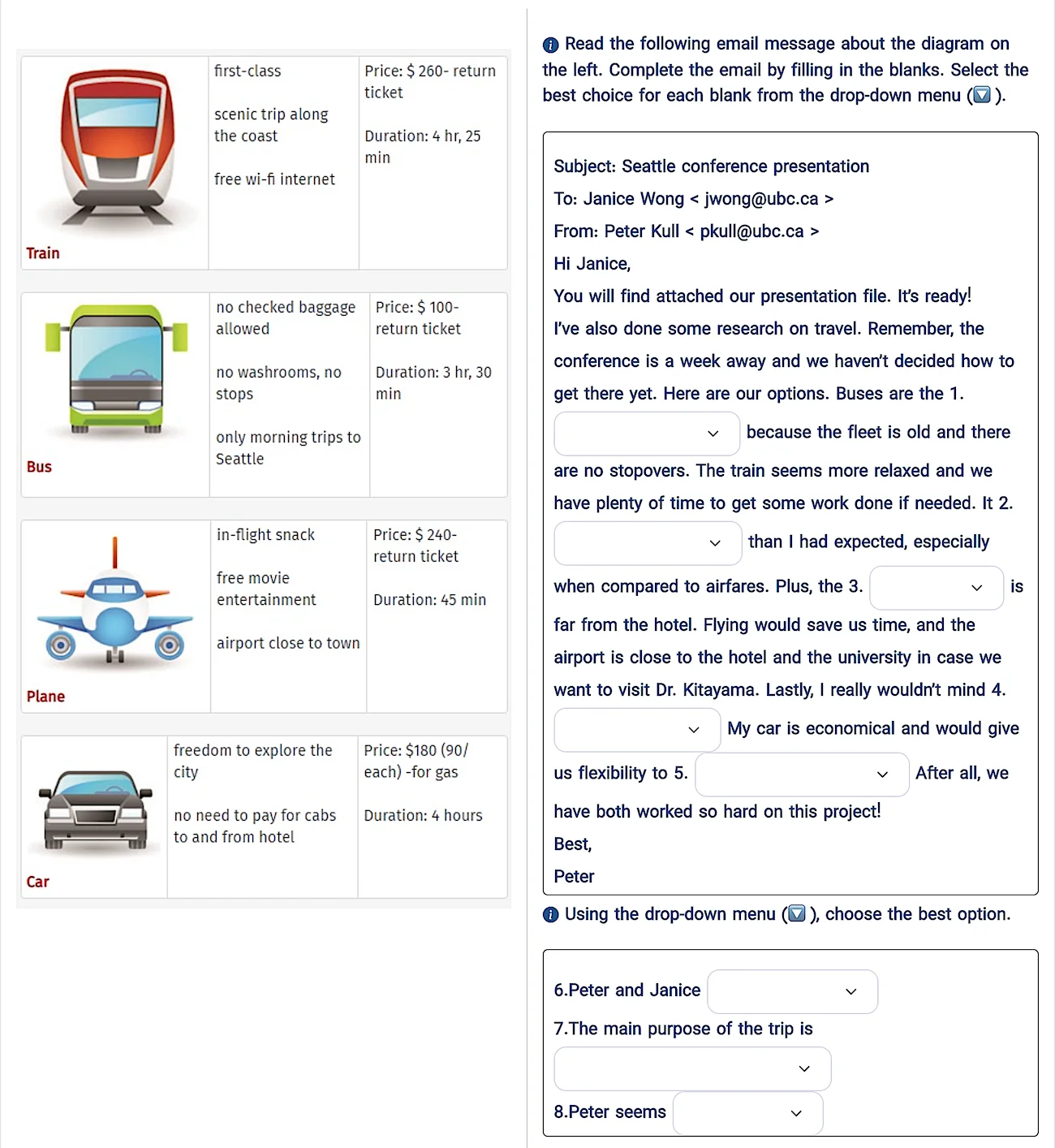
You use the information in the diagram to choose the correct answers and complete missing parts of the message. The challenge is to locate the relevant detail in the visual, connect it with the written context, and recognize paraphrased information rather than simply read a continuous passage.
PTE Core vs CELPIP Listening
Both tests require you to understand everyday spoken English, but their question formats are quite different.
PTE Core Listening
PTE Core includes seven question types:
- Summarize Spoken Text
- Multiple Choice, Multiple Answers
- Fill in the Blanks
- Multiple Choice, Single Answer
- Select Missing Word
- Highlight Incorrect Words
- Write from Dictation
Some questions test general comprehension, while others test very precise listening.
For example:
Write from Dictation: You hear:
Applicants should submit the form before Friday evening.
You type the sentence you heard.
Pearson awards partial credit based on the correct words reproduced in this task.
Highlight Incorrect Words: You listen to a recording while reading its transcript and click the words in the text that are different from what the speaker actually says.
... mental spaces to focus on what truly adds value to your strive. This practice …
If the text says strive but the speaker says life, you click strive because that is the incorrect word displayed on the screen.
The task tests precise listening and your ability to notice small word-level differences.
CELPIP Listening
CELPIP Listening is organized around:
- Problem Solving
- Daily Life Conversation
- Listening for Information
- News Items
- Discussions
- Viewpoints
The emphasis is more heavily on understanding conversations and longer pieces of spoken information and answering multiple questions about them.
For example:
Listening to Viewpoints: You listen to a roughly 3-minute audio recording about a social or community issue and answer 6 multiple-choice questions.
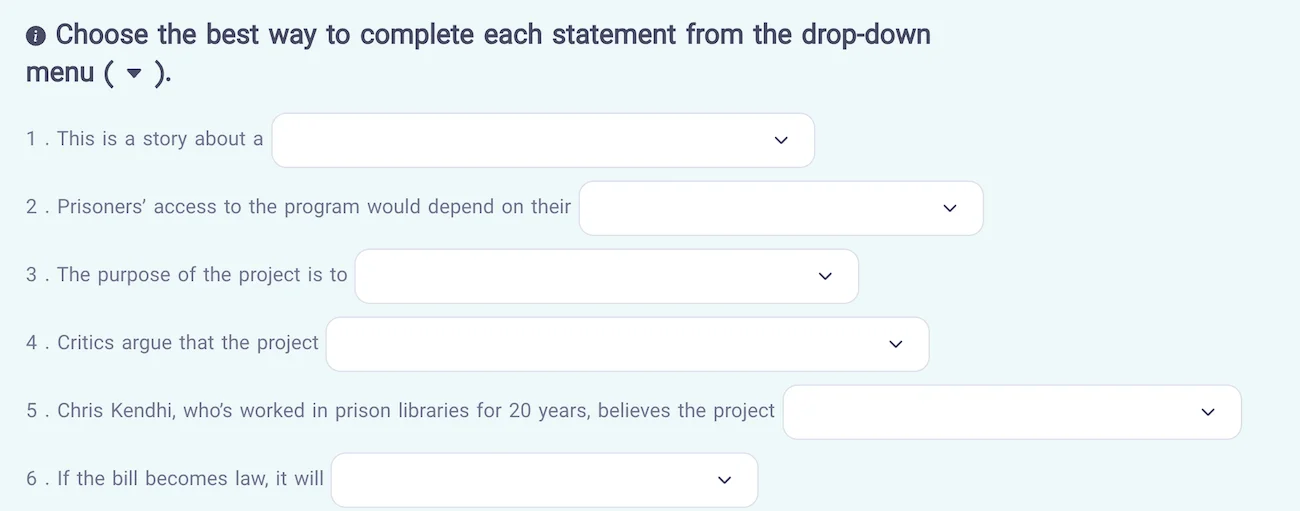
It tests your ability to understand complex opinions, arguments, and opposing perspectives rather than simple facts.
Why PTE Core May Be Easier Overall
The biggest advantage of PTE Core is not that every individual question is easier.
It is that many tasks reduce the amount of thinking you have to do about what to say or write.
Consider the difference:
| PTE Core often asks you to… | CELPIP often asks you to… |
|---|---|
| Repeat information | Generate ideas |
| Read supplied text aloud | Give advice |
| Describe supplied information | Recall a personal experience |
| Summarize supplied content | Make predictions |
| Reproduce a dictated sentence | Persuade someone |
| Answer a short factual question | Explain and defend an opinion |
Choose PTE Core if you:
- prefer structured and predictable question types;
- prefer shorter responses; and
- struggle to quickly brainstorm examples and supporting ideas.
Choose CELPIP if you:
- are comfortable speaking continuously about everyday topics;
- can quickly generate reasons and examples;
- enjoy giving opinions and telling personal stories; and
- prefer conventional passage-based Reading and Listening questions.
Summary
There is no English test that is easier for everyone.
However, PTE Core can be easier to prepare for and more predictable than CELPIP, particularly in Speaking and Writing. PTE Core is generally more structured. Many questions ask you to reproduce, recognize, summarize, or describe information that is already provided.
CELPIP requires considerably more spontaneous idea generation in Speaking and Writing. You may need to give advice, describe personal experiences, make predictions, persuade someone, express an opinion, or develop reasons and examples.
The key reason is simple: PTE Core more frequently tests what you can do with information you are given, while CELPIP more frequently requires you to create, organize, and support your own ideas.
Frequently Asked Questions
Is PTE Core easier than CELPIP?
It depends on the candidate. PTE Core is often more predictable because many Speaking and Writing tasks use information that is already provided, while CELPIP requires more spontaneous idea generation, examples, and extended responses.
Which CELPIP and PTE tests does IRCC accept?
For Canadian immigration, you must take CELPIP-General or PTE Core. PTE Academic is not accepted by IRCC for this purpose.
What is the biggest difference in Speaking?
PTE Core uses short, structured tasks such as Read Aloud and Repeat Sentence. CELPIP has eight extended speaking tasks that often require you to give advice, recall experiences, make predictions, or describe unusual situations.
How do the Writing sections differ?
Both tests include an email task. PTE Core also uses Summarize Written Text and integrated tasks that contribute to Writing. CELPIP's second task is a survey response that requires you to choose a position and develop reasons, examples, and supporting details.